

Hey there! As a supplier of graphite stoppers, I often get asked about the differences between graphite stoppers and other types of stoppers. So, I thought I'd take a moment to break it down for you.
First off, let's talk about what a stopper is. In the industrial world, stoppers are used to control the flow of liquids, usually molten metals. They're a crucial part of the metal - smelting process, and choosing the right one can make a huge difference in terms of efficiency and quality.
Graphite Stoppers
Let's start with graphite stoppers. Graphite is a form of carbon, and it has some unique properties that make it an excellent material for stoppers. One of the main advantages of graphite stoppers is their high - temperature resistance. Graphite can withstand extremely high temperatures without melting or deforming. This is super important in metal - smelting, where the molten metals can reach temperatures of thousands of degrees Fahrenheit.
Graphite also has good thermal conductivity. This means that it can transfer heat away from the stopper quickly, which helps to prevent overheating and damage. It also has a relatively low coefficient of thermal expansion. What does that mean? Well, it means that when the graphite stopper is exposed to high temperatures, it won't expand too much. This is crucial because if a stopper expands too much, it can cause problems with the fit and the control of the liquid flow.
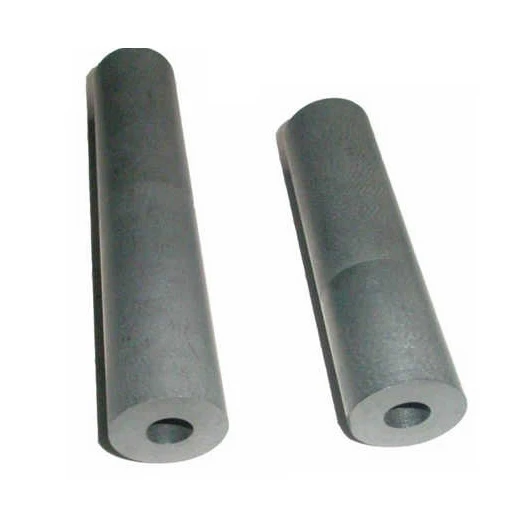

Another great thing about graphite stoppers is their chemical stability. Graphite is resistant to many chemicals, including acids and alkalis. This makes it suitable for use with a wide range of molten metals, without the risk of corrosion or chemical reactions that could affect the quality of the metal or the performance of the stopper.
You can check out our Graphite Stopper on our website to see more details about our high - quality products.
Ceramic Stoppers
Now, let's compare graphite stoppers with ceramic stoppers. Ceramic stoppers are also popular in the metal - smelting industry. Ceramics are known for their high - temperature resistance, just like graphite. However, they have some differences.
Ceramics are generally more brittle than graphite. This means that they're more likely to crack or break under stress. In a metal - smelting environment, where there can be a lot of mechanical vibrations and thermal shocks, this brittleness can be a real drawback. If a ceramic stopper cracks, it can lead to leaks and other problems in the metal - pouring process.
Ceramics also have a higher coefficient of thermal expansion compared to graphite. This means that they expand more when heated, which can cause issues with the fit of the stopper in the pouring nozzle. Over time, this can lead to uneven flow control and potential quality issues with the cast metal.
Metal Stoppers
Next up, metal stoppers. Metal stoppers are made from various metals, such as steel or copper. They have their own set of advantages and disadvantages.
One of the main advantages of metal stoppers is their strength. Metals are generally stronger and more durable than graphite or ceramics. They can withstand a lot of mechanical stress without breaking. However, metal stoppers have a major drawback when it comes to high - temperature applications. Most metals have a relatively low melting point compared to graphite and ceramics. This means that they can melt or deform when exposed to the high temperatures of molten metals.
Metals also tend to react with some molten metals. For example, steel can react with certain types of molten aluminum, which can contaminate the metal and affect the quality of the final product. In contrast, graphite's chemical stability makes it a better choice in many cases.
Rubber Stoppers
Rubber stoppers are commonly used in laboratory settings and some low - temperature applications. But in the metal - smelting industry, they're not a practical option.
Rubber has a very low melting point. It will quickly melt when exposed to the high temperatures of molten metals. It also doesn't have the necessary chemical resistance to withstand the harsh environment of metal smelting. So, rubber stoppers are out of the question when it comes to controlling the flow of molten metals.
Graphite in Other Forms
Graphite is not only used in stoppers. We also offer Graphite Coin Casting Mold and Graphite Tube. Graphite coin casting molds are used to create high - quality coins. The properties of graphite, such as its high - temperature resistance and chemical stability, make it an ideal material for this application. Graphite tubes are used in various metal - smelting processes, where they can be used to transport molten metals or as part of a heating system.
Why Choose Our Graphite Stoppers
As a supplier, we take pride in offering high - quality graphite stoppers. Our graphite stoppers are made from the best - quality graphite materials. We use advanced manufacturing techniques to ensure that each stopper has the right dimensions and properties.
We understand the importance of precision in the metal - smelting process. That's why our graphite stoppers are designed to provide accurate flow control. Whether you're casting small parts or large ingots, our stoppers can help you achieve the best results.
We also offer excellent customer service. If you have any questions about our graphite stoppers or need help choosing the right one for your application, our team is always here to assist you.
Let's Connect
If you're in the market for a reliable stopper for your metal - smelting process, I encourage you to consider our graphite stoppers. We're confident that you'll see the difference in quality and performance compared to other types of stoppers.
Don't hesitate to reach out to us if you have any questions or if you're interested in placing an order. We're here to help you find the perfect solution for your metal - smelting needs.
References
- "Handbook of Industrial Materials"
- "Principles of Metal Casting"