


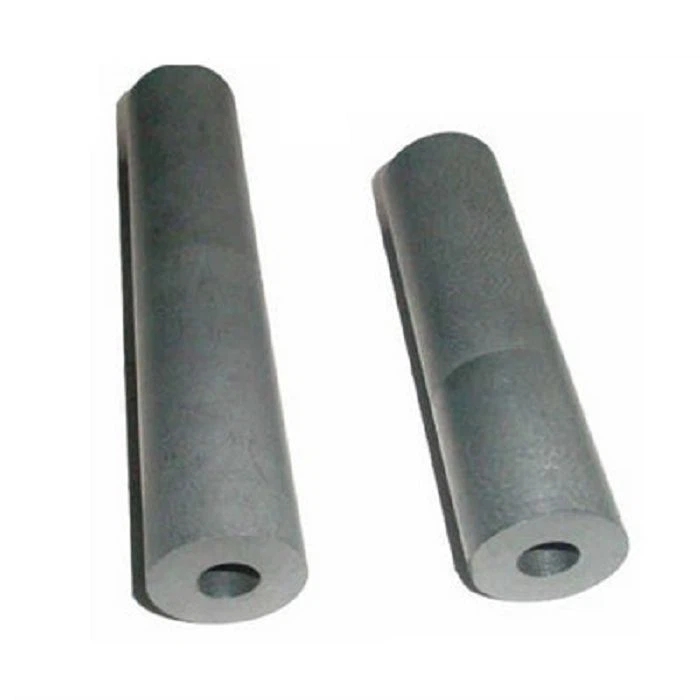
High-purity graphite rods are manufactured from synthetic or molded carbon-graphite materials. They serve either as finished functional components (such as electrodes, heating elements, or structural fixtures) or as machining blanks for custom-engineered parts.
Unlike general-purpose carbon, high-purity graphite is selected when applications require controlled ash content, precise electrical/thermal conductivities, and reliable structural integrity under specific operating conditions.
Primary Product Type: Extruded, molded, or isostatically pressed graphite rods.
Core Material Characteristics: High thermal shock resistance, electrical conductivity, high-temperature stability (in non-oxidizing environments), and machinability.
Target Procurement Use: Industrial furnace assembly, semiconductor crystal-growth fixtures, EDM electrodes, and precision-machined technical components.
Core Technical Parameters & Specification Matrix
|
Parameter Category |
What to Specify / Evaluate |
Technical Significance |
|
Graphite Grade & Purity |
Material designation, total carbon purity, or max allowable ash content |
Controls trace impurities to prevent process contamination in sensitive environments. |
|
Density & Grain Structure |
Bulk density range |
Influences mechanical strength, surface finish achievable during machining, and thermal stability. |
|
Electrical & Thermal Properties |
Electrical resistivity target, thermal conductivity |
Determines performance in electrical discharge machining (EDM) or heating applications. |
|
Mechanical Properties |
Flexural strength, compressive strength |
Evaluates load-bearing capacity when used as support columns or structural fixtures. |
|
Dimensions & Tolerances |
Outside diameter (OD), length, and straightness limits |
Ensures proper mechanical fit and clearance within equipment assemblies. |
|
Machined Features |
Drilled holes, threads, grooves, stepped profiles, or as-machined blanks |
Defines the extent of CNC processing required from technical drawings. |
Application Areas
This product is engineered for industrial operations and technical supply chains, primarily serving:
Industrial Equipment Manufacturers & OEM Builders requiring custom graphite internals.
Furnace Maintenance & High-Temperature Engineering Contractors needing replacement support rods, spacers, or heating components.
Semiconductor and Crystal-Growth Equipment Operators demanding controlled ash content and strict trace-element purity.
Machine Shops & Component Fabricators purchasing graphite rods as raw material blanks for custom CNC turning and milling.
Industry Applications & Operating Condition Considerations
Graphite performance depends heavily on the operating environment. Material selection must account for temperature, atmosphere, and mechanical loading.
High-Temperature Furnaces: Utilized as support members, heating elements, thermal insulation shields, and structural spacers.
Operating Caveat: Graphite oxidizes in oxygen-containing environments at elevated temperatures. Maximum service temperatures must be evaluated alongside vacuum, inert gas, or reducing atmosphere conditions.
Semiconductor & Crystal-Growth (CZ) Equipment: Applied where strict trace-element control is required to prevent contamination during silicon processing. Purity requirements and purification treatments must match actual process protocols.
Electrical and Electrochemical Applications: Leveraged for conductive components and selected electrode applications based on evaluated electrical resistivity and chemical compatibility.
Custom Manufacturing & Processing Capabilities
We support custom graphite rod requirements through three distinct processing routes (subject to technical feasibility review):
Drawing-Based Customization
Manufacturing strictly according to customer-supplied technical drawings (PDF, STEP, CAD) detailing dimensions, tolerances, and machined features (threads, holes, grooves).
Sample-Based Processing
Reverse-engineering or replicating components based on customer-provided reference samples.
Material-Based Processing
Machining using customer-supplied graphite stock or matching specified material grades.
Quality Control & Technical Documentation
To support industrial procurement and quality assurance, the following items can be confirmed during quotation:
- Material grade and batch identification
- Available material property data sheets
- Purity or ash-content verification (as agreed per contract)
- Dimensional inspection reports
- Secure export packaging (designed to prevent transit chipping, shock, or moisture exposure)
FAQ
Q: What purity level should I choose for a graphite rod?
A: There is no universal purity level. The required carbon content and impurity limits depend directly on your process contamination sensitivity, operating temperature, and electrical/mechanical requirements. Please share your application details or existing grade for evaluation.
Q: Can you supply custom diameters and lengths?
A: Yes. Custom dimensions are evaluated against available raw stock, material grades, and machining tolerances. Please provide your required outer diameter, length, tolerance limits, and order quantity.
Q: Can graphite rods be machined with threads or holes?
A: Yes, depending on the graphite grade, rod dimensions, feature geometry, and wall thickness. Submitting a technical drawing is the most reliable way for our engineering team to assess feature feasibility.
Q: Are high-purity graphite rods suitable for vacuum furnaces?
A: Graphite is widely used in vacuum furnaces, but suitability depends on the specific temperature profile, vacuum level, residual gases, component loading, and contamination limits. Operating conditions must be reviewed alongside the material grade.
Hot Tags: high-purity graphite rods, China high-purity graphite rods manufacturers, suppliers