

How does a diamond sintering mold work?
As a trusted supplier of diamond sintering molds, I am often asked about the intricate workings of these essential tools in the manufacturing industry. Diamond sintering molds play a crucial role in the production of high - quality diamond products, from cutting tools to industrial components. In this blog, I will delve into the science and mechanics behind how a diamond sintering mold works.
The Basics of Diamond Sintering
Before we explore the mold itself, it's important to understand the concept of diamond sintering. Sintering is a process where powdered materials are compacted and heated to a temperature below their melting point, causing the particles to bond together. In the case of diamond sintering, diamond powder, along with other additives such as metal binders, is used. The goal is to create a dense, solid object with enhanced mechanical properties.
Components of a Diamond Sintering Mold
A diamond sintering mold typically consists of several key components. The mold cavity is the central part where the diamond powder mixture is placed. It is designed to have the exact shape and dimensions of the final product. The mold walls are made of a material that can withstand high temperatures and pressures. Graphite is a commonly used material for diamond sintering molds due to its excellent thermal conductivity, high melting point, and chemical stability.
Graphite molds offer several advantages. They can be machined to precise tolerances, allowing for the production of complex shapes. Additionally, graphite has a low coefficient of friction, which helps in the easy removal of the sintered diamond product from the mold. For more information on graphite - based products related to sintering, you can visit our Graphite Gasket page.
The Sintering Process
The diamond sintering process using a mold can be divided into several steps:
- Powder Preparation: The diamond powder and metal binder are carefully mixed in the appropriate proportions. The quality and distribution of the powder mixture are critical for the final properties of the sintered product.
- Mold Filling: The prepared powder mixture is loaded into the mold cavity. Care must be taken to ensure uniform filling to avoid density variations in the final product.
- Compression: The mold is then placed in a press, where it is subjected to high pressure. This compresses the powder mixture, reducing the voids between the particles and increasing the density. The pressure applied can range from several hundred to several thousand megapascals, depending on the specific requirements of the product.
- Heating: After compression, the mold is heated to a high temperature. The heating process is carefully controlled to ensure that the metal binder melts and flows around the diamond particles, facilitating the bonding process. The temperature can reach up to 1500 - 2000 degrees Celsius, depending on the type of binder used.
- Cooling and Ejection: Once the sintering process is complete, the mold is cooled down slowly. This helps to relieve internal stresses in the sintered product. After cooling, the sintered diamond product is ejected from the mold.
Role of the Mold in the Sintering Process
The diamond sintering mold plays several important roles during the sintering process:
- Shape Formation: The mold cavity determines the shape and dimensions of the final sintered product. It allows for the production of complex geometries that would be difficult or impossible to achieve through other manufacturing methods. For example, Diamond Die - casting Mold can be used to create precise and detailed shapes for various applications.
- Pressure Distribution: The mold helps to distribute the pressure evenly across the powder mixture during compression. This ensures that the density of the final product is uniform, which is essential for its mechanical properties.
- Thermal Management: The mold material, such as graphite, helps in the efficient transfer of heat during the heating and cooling processes. This ensures that the temperature is evenly distributed within the powder mixture, preventing hot spots and ensuring consistent sintering.
- Protection: The mold protects the powder mixture from the external environment during the sintering process. It prevents oxidation and contamination, which could affect the quality of the final product.
Quality Control and Maintenance
To ensure the proper functioning of diamond sintering molds, quality control and maintenance are essential. Regular inspections should be carried out to check for any signs of wear, cracks, or deformation. The mold surface should be cleaned and polished periodically to maintain its smoothness and prevent sticking of the sintered product.

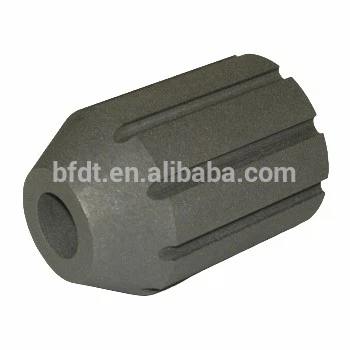
In addition, the mold material should be carefully selected based on the specific requirements of the sintering process. For applications where high - temperature and high - pressure resistance are crucial, Graphite Thrust Bearing can be a suitable option.
Conclusion
In conclusion, diamond sintering molds are vital tools in the production of high - quality diamond products. They work by providing a precise shape, distributing pressure evenly, managing heat transfer, and protecting the powder mixture during the sintering process. As a supplier of diamond sintering molds, we are committed to providing our customers with high - quality molds that meet their specific needs.
If you are interested in learning more about our diamond sintering molds or have any questions regarding the sintering process, we encourage you to contact us for a detailed discussion. Our team of experts is ready to assist you in finding the best solutions for your manufacturing requirements.
References
- German, R. M. (1996). Sintering Theory and Practice. John Wiley & Sons.
- Kingery, W. D., Bowen, H. K., & Uhlmann, D. R. (1976). Introduction to Ceramics. John Wiley & Sons.