

As a supplier of Graphite Crystallizers, I've had numerous conversations with clients and industry experts about the crystallization rate within these essential pieces of equipment. Understanding the crystallization rate in a Graphite Crystallizer is crucial for optimizing production processes, ensuring product quality, and maximizing efficiency in various industries, especially in metal smelting.
What is Crystallization Rate?
The crystallization rate refers to the speed at which a substance changes from a liquid or gaseous state to a solid crystalline form. In the context of a Graphite Crystallizer, it is the rate at which molten metal or other materials solidify into a crystalline structure within the graphite mold. This rate is influenced by several factors, including temperature, the composition of the material being crystallized, and the design and properties of the Graphite Crystallizer itself.
Factors Affecting Crystallization Rate in a Graphite Crystallizer
Temperature
Temperature plays a pivotal role in determining the crystallization rate. Generally, a lower temperature difference between the molten material and the cooling medium (such as water or air) around the Graphite Crystallizer leads to a slower crystallization rate. This is because a smaller temperature gradient reduces the driving force for the phase change from liquid to solid. Conversely, a larger temperature difference accelerates the crystallization process.
For example, in the production of certain metals, precise temperature control is essential. If the temperature is too high, the crystallization rate may be too slow, leading to larger crystal sizes, which can affect the mechanical properties of the final product. On the other hand, if the temperature is too low, the crystallization rate may be too fast, resulting in the formation of defects such as cracks or uneven crystal structures.
Material Composition
The chemical composition of the material being crystallized also has a significant impact on the crystallization rate. Different elements and compounds have different melting points and crystallization behaviors. For instance, alloys with a higher content of elements that have a strong tendency to form crystals may crystallize more rapidly than pure metals.
Moreover, impurities in the material can act as nucleation sites, promoting the formation of crystals and increasing the crystallization rate. However, excessive impurities can also lead to the formation of non - uniform crystal structures or even affect the quality of the final product. Therefore, controlling the material composition is crucial for achieving the desired crystallization rate and product quality.
Graphite Crystallizer Properties
The properties of the Graphite Crystallizer itself, such as its thermal conductivity, porosity, and surface finish, can influence the crystallization rate. Graphite is known for its excellent thermal conductivity, which allows for efficient heat transfer from the molten material to the cooling medium. A higher thermal conductivity of the Graphite Crystallizer generally leads to a faster crystallization rate.
The porosity of the graphite can also affect the crystallization process. A porous graphite structure can provide additional surface area for heat transfer, but it may also trap gases or impurities, which can have a negative impact on the crystallization rate and product quality. Additionally, the surface finish of the Graphite Crystallizer can influence the adhesion of the crystallized material and the formation of crystal nuclei. A smooth surface may result in a more uniform crystallization process, while a rough surface may promote the formation of irregular crystals.
Importance of Controlling Crystallization Rate
Controlling the crystallization rate in a Graphite Crystallizer is of utmost importance for several reasons. Firstly, it directly affects the quality of the final product. A well - controlled crystallization rate can result in a uniform crystal structure, which is essential for achieving the desired mechanical, electrical, and chemical properties of the material.
Secondly, optimizing the crystallization rate can improve production efficiency. By reducing the time required for crystallization, manufacturers can increase the throughput of their production lines, leading to higher productivity and lower costs.
Finally, controlling the crystallization rate can also enhance the stability and reproducibility of the production process. This is particularly important in industries where consistent product quality is required, such as the aerospace and automotive industries.
Measuring and Monitoring Crystallization Rate
Measuring and monitoring the crystallization rate in a Graphite Crystallizer is a complex task that requires advanced techniques and equipment. One common method is to use thermal sensors to measure the temperature change of the molten material during the crystallization process. By analyzing the temperature - time curve, it is possible to estimate the crystallization rate.
Another approach is to use imaging techniques, such as X - ray diffraction or electron microscopy, to observe the crystal growth process directly. These techniques can provide detailed information about the crystal structure and growth rate, allowing for more accurate control of the crystallization process.
Our Graphite Crystallizers and Crystallization Rate Optimization
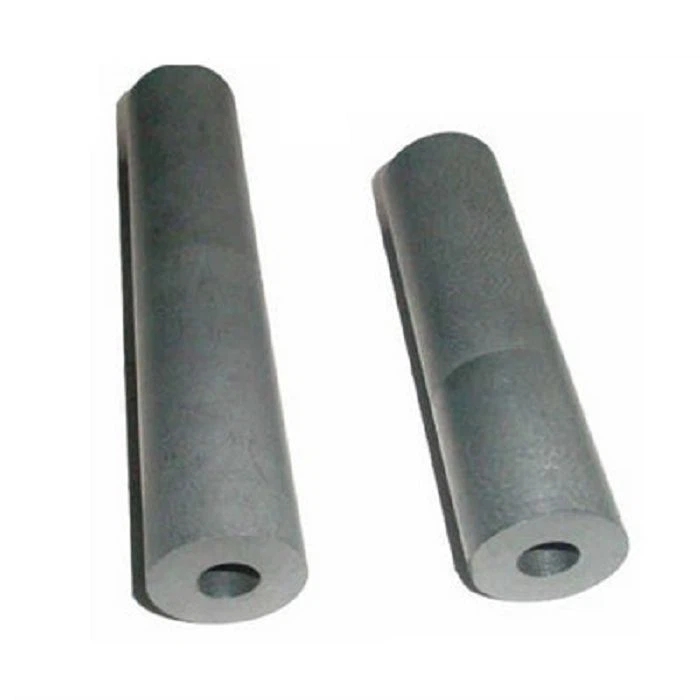
As a leading supplier of Graphite Crystallizers, we understand the importance of optimizing the crystallization rate. Our Graphite Crystallizers are designed with high - quality graphite materials that offer excellent thermal conductivity and stability. We can customize the design and properties of our Graphite Crystallizers according to the specific requirements of our clients, ensuring optimal heat transfer and crystallization performance.
In addition to our high - quality Graphite Crystallizers, we also offer a range of related products, such as Graphite Degassing Rotors and Graphite Tubes, which can further enhance the metal smelting and crystallization processes. Our team of experts is always available to provide technical support and advice on optimizing the crystallization rate and improving the overall production efficiency.

Conclusion
In conclusion, the crystallization rate in a Graphite Crystallizer is a critical parameter that affects the quality and efficiency of the metal smelting and crystallization processes. By understanding the factors that influence the crystallization rate and implementing appropriate control measures, manufacturers can achieve better product quality, higher productivity, and lower costs.
If you are interested in learning more about our Graphite Crystallizers or other graphite products, or if you have any questions about optimizing the crystallization rate in your production process, please feel free to contact us. We look forward to discussing your specific needs and providing you with the best solutions.
References
- "Principles of Crystal Growth and Dissolution" by A. G. Walton
- "Materials Science and Engineering: An Introduction" by William D. Callister Jr. and David G. Rethwisch
- "Thermal Properties of Graphite and Carbon Materials" edited by P. A. Thrower