


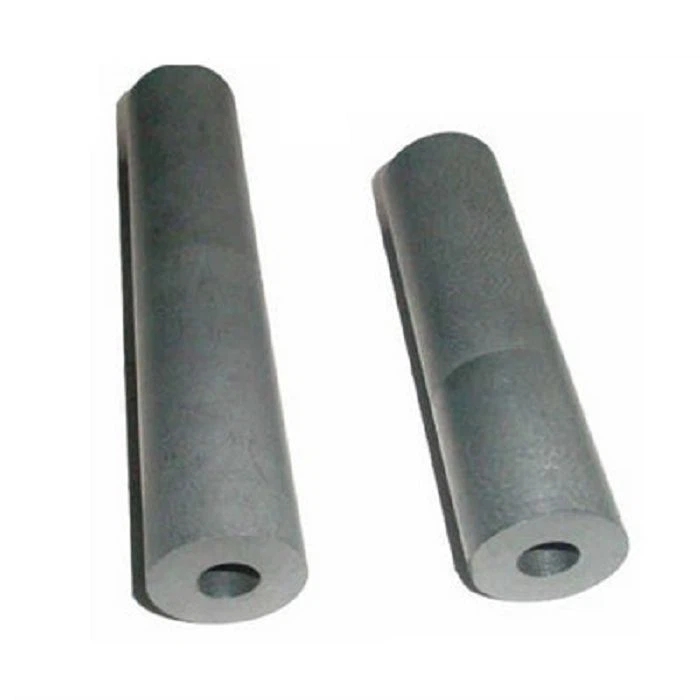
Why Choose Us?
Rich Experience
Beijing North Xinyuan Technology Co., Ltd. was established in 1993. After nearly 20 years of business development, it has successively established Beijing North Xinyuan Electrical Carbon Products Co., Ltd., Supply and Marketing Branch, and Science and Technology Development Branch. Formed today's North Xinyuan Electric Carbon Group.
Wide Product Range
Our company main products are divided into six series (namely carbon graphite products for the electronic and semiconductor industries, carbon graphite products for diamond tool sintering molds, carbon graphite products for metal smelting and processing, carbon graphite products for the photovoltaic industry, carbon graphite products for industrial furnace processing, and carbon graphite products for laboratory analysis).
Production Market
The company has the right to conduct self-operated import and export business and is a diversified outward oriented enterprise that is fully applicable to the WTO market. In addition to being sold to various industries in main provinces and cities of China, the company's products are also exported to more than 20 countries and regions overseas.
Professional Team
The company has professional technical talents, enterprise management talents, advanced graphite processing equipment, exquisite production technology, and advanced graphite processing technology, as well as professional graphite CNC processing centers, etc. It can process various difficult graphite products according to customer requirements and providing customers with integrated services from design programming to machining.
What is Graphite Tube?
Graphite tubes are lengths of cylinder or tubing formed from machined graphite or graphite mixtures. These tubes are used often in furnace and heat applications due to graphite's physical properties.
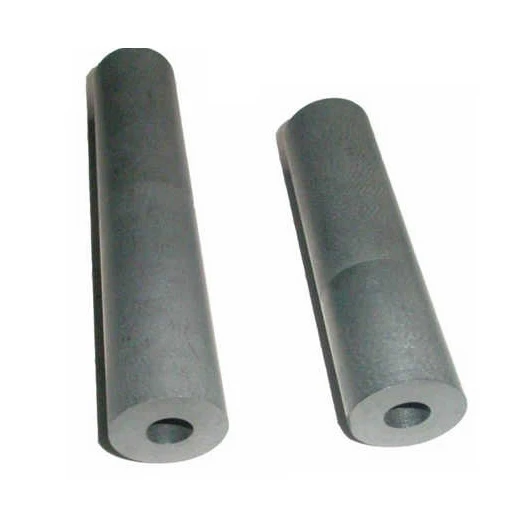
As the name implies, graphite tubes are graphite products made by pressing high-purity graphite powder through a specific process.

Graphite crystallizers are used in metallurgy and chemical industry, mainly in horizontal continuous casting.

Graphite crucibles have good thermal conductivity and high temperature resistance.

Graphite ingot is used for smelting non-ferrous metals and alloys such as copper, gold, and aluminum.

The standard version of the coin casting die is 50mm x 50mm in size. It is very suitable for metal casting and jewelry making.

Graphite Molds for Continuous Casting
Graphite molds for continuous casting can be divided into two types according to the forging method.

Graphite stopper rod is a refractory component used to cut off and adjust the flow rate during the metal liquid pouring process.

Graphite Mold for Star Of David Gold
The graphite mold for star of david gold is made of high-density fine-grained graphite. It has a smooth cavity surface.

The graphite degassing rotor rotating nozzle is made of high-purity graphite. In addition to considering the bubbles to be dispersed.
Benefits of Graphite Tube
Graphite Furnace Applications
Graphite tubes are integral to graphite furnaces.
They are selected based on the target element and sample composition.
These tubes help in restricting chemical interference caused by coexisting substances, ensuring accurate analysis.
They are particularly useful in the analysis of environmental samples like seawater and industrial waste.
Heat and Corrosion Resistance
Graphite tubes are employed in situations involving most corrosive materials under conditions of heat transfer.
This is due to their high resistance to acids and structural strength.
They can withstand harsh environmental conditions and extreme heat.
This property makes them ideal for use in high-temperature processes and environments.
Graphite Tube Furnace
The graphite tube furnace is a specific type of furnace that uses graphite tubes for heating samples or workpieces.
These furnaces offer fast heating speeds, good temperature uniformity, and ease of operation.
They are suitable for graphitization treatment, graphene growth, and carbon nanotube preparation.
Forming Process
Graphite tubes are formed using techniques such as extrusion, compression molding, or isostatic pressing.
Each method produces different grades of graphite suitable for various purposes.
The tubes can be customized in terms of length, diameter, wall thickness, and flexibility, offering versatility in their application.
Coating and Materials
Although optional, coating graphite tubes can increase their lifespan and corrosion resistance.
Materials like siloxane are often used for coating due to their ability to prevent oxidation even at high temperatures.
Metallic graphite mixtures and copper graphite are alternatives that offer higher conductivity and strength, albeit at a higher cost.
Industries and Applications
Graphite tubes find applications across multiple industries including chemical, metallurgy, pharmaceutical, electroplating, printing, and environmental protection.
They are also used in consumer products such as kite frames, tent frames, kayak riggers, and fishing rods.
Benefits
The benefits of using graphite tubes include their resistance to acids, structural strength, impact resistance, high volume utilization, and high heat transfer effect.
They are long-lasting and easy to maintain, making them a cost-effective solution for many industrial applications.
Graphite tubes are characterized by their lightweight yet robust nature. One of their defining features is their high thermal conductivity, which allows them to efficiently transfer heat, a property that is crucial in applications such as heat exchangers and reactors. Additionally, graphite exhibits excellent resistance to thermal shock and mechanical stress, which enables it to maintain structural integrity even under extreme conditions.
The chemical inertness of graphite is another significant advantage. Unlike metal tubes, which can corrode when exposed to harsh chemicals or extreme temperatures, graphite tubes remain stable, making them ideal for use in corrosive environments. This characteristic is especially relevant in the chemical processing industry, where materials are often subjected to aggressive substances.
Graphite machining is used to create the tubes using processes such as extrusion, compression molding, or isostatic pressing. Each technique produces unique grades of graphite, useful for different purposes. Extruded or pressed graphite is often used in manufacturing operations. Graphite rods and plates that are isostatically crushed have substantially finer graphite particles and smoother surfaces. It's easy to specify custom different lengths, diameters, wall thicknesses, and flexibility for tubes. In contrast to metals, graphite gets stronger as the temperature rises and is less prone to degrade with time or normal wear and tear.
Although coating graphite rods or tubes is optional, coating increases the product's tube life and corrosion resistance. Since siloxane can stop oxidation even at sustained high temperatures, it is frequently employed as a covering material in graphite machining. Metallic graphite mixtures are an option; however, pure graphite performs better in terms of electrical conductivity and durability. Although more costly, copper graphite may be a better alternative for applications that require more conductivity and strength than pure graphite.
Installing a Graphite Tube
· How to replace and align graphite tubes. Replacement of graphite tubes are a routine maintenance item for all Graphite Furnace instruments.
· Removal and alignment tools for your Graphite Furnace will be required.
· When your lamps, GTA/Furnace, and sampler are set up, you can insert a graphite tube and start your analytical run. Graphite tubes should be changed as part of routine maintenance and sample preparation.
· Ensure that both the spectrometer and GTA control unit are switched off and the instrument is unplugged before proceeding.
· For Zeeman instruments (furnace only capabilities), tilt the workhead forward until it rests against the stop for easier access to the top of the furnace to complete this procedure. For a Furnace instrument (with both flame and furnace capabilities) removal of the workhead is not required for tube removal or installation. For instructions on how to remove the workhead if preferred, see Removing the GTA Furnace.
· Swing the toggle lever completely to the clockwise direction. The right electrode assembly should fall away from the center block.
· Use the wire tool provided with the instrument to remove the graphite tube.
Applications of Graphite Tube
Graphite components play a crucial role in numerous industries, owing to their exceptional properties and reliability. Some of the key applications of graphite machining include:
Aerospace
Graphite components are widely used in aerospace applications due to their lightweight and high thermal stability, essential for aircraft and spacecraft.
Electronics
The electrical conductivity and thermal management capabilities of graphite make it ideal for electronic devices and heat sinks.
Automotive
In the automotive industry, graphite is utilized in components like gaskets, seals, and brushes, benefiting from its self-lubricating properties and durability.
Semiconductor Manufacturing
Graphite is essential in semiconductor manufacturing processes as crucibles, susceptors, and heating elements due to its ability to withstand high temperatures.
Graphite Tube Forming Process
The resulting pasty mixture may be compacted using one of the shape forming techniques: extrusion, vibro-molding or cold isostatic pressing.
Extrusion consists in forcing the pasty mixture through a die with an opening. Extrusion results in a long product such as rods, bars, long plates, or tubes with regular cross-sections, which may be cut into pieces of the required length. Extruded graphite materials are isotropic. The properties in the extrusion direction differ from the properties in other directions.
Vibration molding is a discontinuous shaping method for products with large dimensions. A mold is filled with the pasty mixture and a heavy metal plate is put on top of it. Then the material is compacted by vibrating the mold. The formed bodies show a higher degree of isotropy compared to extruded materials.
Cold isostatic pressing is the powder compaction method conducted at room temperature and involving applying pressure from multiple directions through a liquid medium surrounding the compacted part. A flexible mold immersed in a pressurized liquid medium is used. Materials with uniform anisotropic structure are prepared using the isostatic pressing method.
How to Use Graphite Tube?
Graphite Tubes are high-performance components renowned for their exceptional thermal conductivity, chemical resistance, and stability at high temperatures. They are widely used in the semiconductor industry for crystal growth of materials like silicon and sapphire, benefiting from their ability to withstand extreme conditions. In material science, they facilitate high-temperature reactions and advanced material synthesis. Their excellent thermal conductivity and resistance to thermal shock make them ideal for metallurgy applications, including metal processing.
In the chemical industry, they handle corrosive chemicals and reactive gases due to their inert nature. Additionally, they are employed in glass manufacturing for melting high-temperature glasses and in the nuclear industry for components requiring stability under radiation. Graphite Tubes are also valuable in research and development settings for high-temperature experiments, enhancing accuracy and efficiency. Their combination of properties makes them essential for these demanding and high-precision applications.
Our Factory
Beijing North Xinyuan Technology Co., Ltd. (formerly known as Beijing North Xinyuan Electrical Carbon Products Co., Ltd.) was established in 1993. After nearly 20 years of business development, it has successively established Beijing North Xinyuan Electrical Carbon Products Co., Ltd., Supply and Marketing Branch, and Science and Technology Development Branch. Formed today's North Xinyuan Electric Carbon Group. The company produces and operates various (Great Wall brand) graphite processing products and graphite materials. The company has the right to conduct self-operated import and export business and is a diversified outward oriented enterprise that is fully applicable to the WTO market.


Ultimate FAQ Guide to Graphite Tube
Hot Tags: graphite tube, China graphite tube manufacturers, suppliers, graphite distributors for metal smelting, graphite rods for metal smelting, graphite products for base metal smelting, graphite stoppers for metal smelting, graphite products for ferrous metal smelting, graphite products for aluminum smelting