


Why Choose Us?
Rich Experience
Beijing North Xinyuan Technology Co., Ltd. was established in 1993. After nearly 20 years of business development, it has successively established Beijing North Xinyuan Electrical Carbon Products Co., Ltd., Supply and Marketing Branch, and Science and Technology Development Branch. Formed today's North Xinyuan Electric Carbon Group.
Wide Product Range
Our company main products are divided into six series (namely carbon graphite products for the electronic and semiconductor industries, carbon graphite products for diamond tool sintering molds, carbon graphite products for metal smelting and processing, carbon graphite products for the photovoltaic industry, carbon graphite products for industrial furnace processing, and carbon graphite products for laboratory analysis).
Production Market
The company has the right to conduct self-operated import and export business and is a diversified outward oriented enterprise that is fully applicable to the WTO market. In addition to being sold to various industries in main provinces and cities of China, the company's products are also exported to more than 20 countries and regions overseas.
Professional Team
The company has professional technical talents, enterprise management talents, advanced graphite processing equipment, exquisite production technology, and advanced graphite processing technology, as well as professional graphite CNC processing centers, etc. It can process various difficult graphite products according to customer requirements and providing customers with integrated services from design programming to machining.
What is Graphite Crucible?
Graphite crucibles are refractory containers specially shaped for metallurgical operations. These are made of a mixture of graphite, refractory clay, grog and other additives. These crucibles are termed as clay bonded graphite crucibles according to the raw materials used. The crucibles are available with or without spout. These crucibles are used for melting ferrous, non-ferrous metals alloys and noble metals.
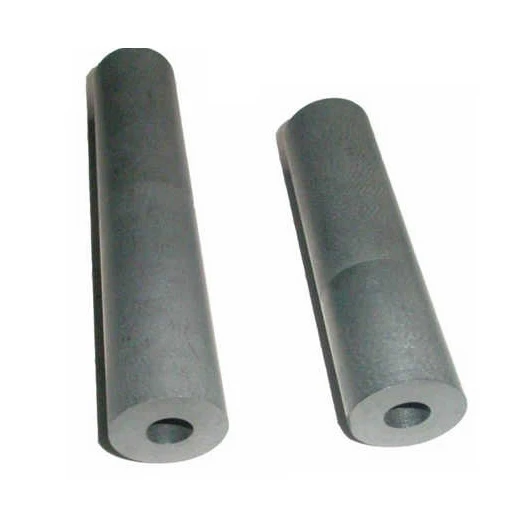
As the name implies, graphite tubes are graphite products made by pressing high-purity graphite powder through a specific process.

Graphite crystallizers are used in metallurgy and chemical industry, mainly in horizontal continuous casting.

Graphite crucibles have good thermal conductivity and high temperature resistance.

Graphite ingot is used for smelting non-ferrous metals and alloys such as copper, gold, and aluminum.

The standard version of the coin casting die is 50mm x 50mm in size. It is very suitable for metal casting and jewelry making.

Graphite Molds for Continuous Casting
Graphite molds for continuous casting can be divided into two types according to the forging method.

Graphite stopper rod is a refractory component used to cut off and adjust the flow rate during the metal liquid pouring process.

Graphite Mold for Star Of David Gold
The graphite mold for star of david gold is made of high-density fine-grained graphite. It has a smooth cavity surface.

The graphite degassing rotor rotating nozzle is made of high-purity graphite. In addition to considering the bubbles to be dispersed.
Benefits of Graphite Crucible
Excellent Thermal Conductivity
Ensures rapid and uniform heating, making them ideal for high-temperature applications.
High-Temperature Resistance
Capable of withstanding temperatures up to 3000℃ in a non-oxidizing atmosphere.
Chemical Stability
Resistant to most acids and alkalis, as well as thermal shock, making them suitable for various chemical environments.
High Mechanical Strength
The graphite structure provides good resistance to mechanical stress and thermal expansion.

Graphite crucibles are typically made from high-purity graphite that can withstand the high heat generated during metal melting processes. They may contain different additives or modifiers that improve their properties such as strength, thermal shock resistance, and chemical inertness.
The manufacturing process usually involves mixing graphite powder with a binding agent, shaping the mixture into a crucible form, and then subjecting it to high temperatures to solidify its structure. This process enhances the crucible's density and mechanical strength, allowing it to hold molten metals without deforming or cracking.
Clay graphite crucibles are made from a combination of clay and graphite, which are carefully selected for their thermal and physical properties. The clay component often serves as a binder, providing structural integrity, while the graphite enhances thermal conductivity and helps manage high temperatures effectively. The ratio of clay to graphite can vary based on the intended application, and manufacturers may incorporate other materials to enhance specific features.
One of the primary attributes of clay graphite crucibles is their ability to withstand extreme temperatures. They can operate effectively at temperatures exceeding 1600 degrees Celsius (2912 degrees Fahrenheit), making them suitable for melting ferrous and non-ferrous metals, including gold, silver, aluminum, and copper. Additionally, the thermal conductivity of graphite enables efficient heat transfer, reducing the energy required for melting, which is both economical and environmentally friendly.
Graphite crucibles are highly suited for casting due to their inert nature. They excel in thermal performance, enabling the rapid melting of metals and improving production efficiency. Their resistance to both chemical attack and corrosion ensures that they maintain their integrity under various workshop conditions, contributing to their longevity and reliability.
In the casting process, the application of heat is crucial to reduce the tensile and yield strengths of metal alloys. The melting points of different metals vary, and successful casting depends on both the alloy's temperature and the crucible's heat resistance. Graphite crucibles are adept at withstanding these high temperatures, making them ideal for a wide range of metal alloys.
Graphite crucibles come in a vast array of shapes, classified by a letter system starting with A. These shapes are further detailed by subcategories based on dimensions like inner diameter (ID or d), outer diameter (OD or D), and height (H), as well as the crucible's design. For example, the illustrated crucible features a cylindrical form with a flat base and lacks any spout or lid.
Graphite crucibles come in a wide variety of shapes, reflecting their diverse applications. They can range from cylindrical forms with or without spouts to cup-like designs, and some may feature a rim or lid, among other configurations.
Over time, graphite crucibles have become indispensable in metalworking. They are available in various sizes, from small units akin to teacups to large vessels capable of holding several tons of molten metal, and can even be integrated into furnace systems.
Graphite crucibles are versatile tools utilized in fuel-fired, electric, and induction furnaces, as well as for transferring and handling molten metals. They must be engineered to meet the specific temperature, chemical, and mechanical demands of each particular process.
Properties of Graphite Crucibles
The properties of graphite crucibles contribute to their exceptional performance:
Thermal Stability
Graphite crucibles can withstand temperatures ranging from 3,000 to 5,000 degrees Celsius without undergoing significant structural changes. This exceptional thermal stability ensures consistent performance even under extreme conditions.
Low Thermal Expansion
Graphite exhibits minimal thermal expansion, meaning it maintains its shape and integrity when exposed to rapid temperature changes. This property prevents cracking or warping of the crucible and enhances its longevity.
Oxidation Resistance
Graphite is highly resistant to oxidation, even at high temperatures. This characteristic prevents the crucible from reacting with oxygen in the air, ensuring the purity of the materials being processed.
Low Wettability
Graphite has low wettability, meaning molten metals do not readily adhere to its surface. This property facilitates easy removal of the solidified metal from the crucible, simplifying the casting and recycling processes.

Different types of graphite crucibles match different metals and alloys.
Graphite-silicon carbide crucibles are suitable for copper-based alloys and aluminum-based alloys due to their thermal shock resistance.
Graphite crucibles are employed for gold and silver melting because they have a small thermal coefficient and strong strain resistance to rapid heating or cooling.
Graphite crucibles are an ideal choice for brass melting because of their durability. It could heat up quickly before the brass metal or alloy oxidizes.
Proper Handling and Maintenance of Graphite Crucibles
To extend the lifespan and enhance the performance of graphite crucibles, it's essential to handle and maintain them correctly. Adhere to these instructions:
Preheat the Crucible: Slowly heat the crucible to the desired temperature to reduce the chance of thermal shock.
Regular Cleaning: After each use, clear the crucible of any residue or impurities to avoid contamination.
Avoid Quick Temperature Changes: Rapid changes in temperature can induce thermal stress, resulting in cracks in the crucible.
Store in a Dry Place: To avoid moisture absorption that could weaken the material, keep the crucibles in a dry location.
Is Graphite Crucible Better Than Ceramic?
Choosing the right crucible is essential for optimal results in manufacturing processes. Factors to consider include the material being melted or analyzed, operating temperature range, and desired level of chemical resistance.
Different materials require different types of crucibles; for example, graphite crucibles are ideal for non-ferrous metals, while ceramic crucibles are better for high-purity materials. High-temperature applications may require crucibles made from materials like silicon carbide or tantalum.
It's also important to consider chemical resistance; crucibles made from materials like platinum, quartz, or zirconia may be more suitable for corrosive materials. Choosing the right crucible ensures efficient, reliable manufacturing processes that produce high-quality results.
Does a Graphite Crucible Need to Be Seasoned?
When you get a brand-new crucible, it needs to be heat-treated before its first use. Heat-treating-or "curing"-a crucible sets it so that when you use it later, it doesn't crack or break down and expose you to extremely hazardous temperatures of melted metals or other substances.
If you acquire a crucible that's been used, it will need to be cleaned before you use it. So, wash your crucible with water and dry with a paper towel. Ensuring all residue from other projects has been removed is important. However, doing this will add moisture to your container that will need to be removed. When possible, start completely fresh.
If moisture is on your crucible when you try to heat it-even if it's not visible to the naked eye-it will flash boil. This will cause the item to crack or explode, which is very dangerous. You don't know what dampness the crucible has been exposed to, so you must temper it to eliminate any moisture.
Graphite crucibles designed for melting gold are crafted from high-quality graphite to ensure excellent thermal shock resistance, stability, oxidation resistance, and mechanical strength. They are engineered to endure temperatures exceeding 2000°C (3632°F).
Graphite crucibles used for melting silver share similar characteristics with those for gold and can endure temperatures above 2000°C (3632°F). These crucibles are constructed from natural graphite, maintaining their chemical and physical integrity. They exhibit minimal thermal expansion and offer resistance to rapid temperature changes, making them suitable for high-temperature applications.


The crucible material must have a much higher melting point than that of the material used in it for processing. Graphite crucible can withstand high temperatures, are chemical and thermal shock resistant. Graphite crucible is ideal for the melting of Aluminium, Copper, etc.
Graphite Crucible Temperature Range can go as high as 5000°F and can be used in furnaces and high heat processes.
Graphite crucibles have many applications within the foundry, laboratory testing, valves, sprinklers, and other heavy-duty products. Graphite crucibles are not very porous.
What Is the Melting Point of a Graphite Crucible?
|
Molecular Weight |
12.01 |
|
Appearance |
Black solid |
|
Melting Point |
3652 - 3697 °C (sublimes) |
|
Boiling Point |
4200 °C |
|
Density |
1.8 g/cm3 |
Are Graphite Crucibles Reusable?
Throughout the history of processing molten uranium, various materials have been investigated and utilized for the containment of molten uranium. Of these, graphite is the most prevalent material due to its ease of fabrication, expense, compatibility with induction systems, and robust characteristics. Graphite in contact with molten uranium will react to form uranium carbide species, thus a coating or mold is needed to prevent reaction of the uranium and the subsequent adherence of the solidified metal.
During the pyrometallurgical treatment of used nuclear fuel for uranium recovery, two operational steps utilize graphite crucibles for containment of molten uranium. The cathode processor step separates molten salt from the uranium while the casting step blends uranium for de-enrichment and allows molten sampling of the uranium. Zirconia and yttria based materials on graphite are employed for the cathode processor and casting steps, respectively.
The real benefit of these materials is their cost effectiveness given the multiple number of times the graphite crucibles can be reused and/or recoated. Nearly thirty uses have been recorded for graphite crucibles at both the cathode processor and casting operations. Uranium holdup from side reactions with the zirconia and yttria materials has been reduced to approximately 1 wt.% of the total uranium throughput.
Our Factory
Beijing North Xinyuan Technology Co., Ltd. (formerly known as Beijing North Xinyuan Electrical Carbon Products Co., Ltd.) was established in 1993. After nearly 20 years of business development, it has successively established Beijing North Xinyuan Electrical Carbon Products Co., Ltd., Supply and Marketing Branch, and Science and Technology Development Branch. Formed today's North Xinyuan Electric Carbon Group. The company produces and operates various (Great Wall brand) graphite processing products and graphite materials. The company has the right to conduct self-operated import and export business and is a diversified outward oriented enterprise that is fully applicable to the WTO market.


Ultimate FAQ Guide to Graphite Crucible
Hot Tags: Foundry Graphite Crucible, China Foundry Graphite Crucible manufacturers, suppliers, graphite products for platinum smelting, graphite products for ferrous metal smelting, graphite boilers for metal smelting, graphite products for niobium smelting, Graphite Stopper, graphite condensers for metal smelting