


Hey there! As a graphite gasket supplier, I often get asked all sorts of questions about our products. One question that's been coming up a lot lately is, "Can graphite gaskets be used in radiation - exposed environments?" Well, let's dive right into it and find out.
First off, let's talk a bit about graphite gaskets. Graphite is an amazing material. It has some really cool properties that make it a top - choice for gaskets in many industries. Graphite gaskets are known for their excellent heat resistance, chemical resistance, and flexibility. They can seal effectively in a wide range of temperatures and pressures, which is why they're used in so many applications, from automotive engines to industrial pipelines.
Now, when it comes to radiation - exposed environments, things get a bit more complicated. Radiation can have some pretty significant effects on materials. High - energy radiation, like gamma rays or neutrons, can cause changes in the structure of a material at the atomic level. This can lead to things like embrittlement, swelling, or changes in the material's chemical properties.
So, can graphite gaskets hold up in these tough conditions? The short answer is, it depends. Graphite is a relatively stable material when it comes to radiation. Compared to some other materials, it has a pretty good resistance to radiation - induced damage.
Graphite has a high degree of crystallinity, which means its atoms are arranged in a regular, repeating pattern. This ordered structure gives it some natural resistance to radiation. When radiation hits the graphite, the energy is absorbed and dissipated in a way that doesn't cause too much damage to the overall structure of the material.
However, that doesn't mean graphite gaskets are completely immune to radiation. Prolonged exposure to high - level radiation can still cause some problems. For example, over time, radiation can cause the graphite to become more brittle. This can reduce the gasket's flexibility and its ability to seal properly. If the gasket becomes too brittle, it might crack or break, leading to leaks.
Another factor to consider is the type of radiation. Different types of radiation have different effects on graphite. Neutron radiation, for instance, can cause transmutation reactions in the graphite. This means that some of the carbon atoms in the graphite can be converted into other elements, which can change the material's properties. Gamma radiation, on the other hand, mainly causes ionization in the material, which can lead to heating and some structural changes.

The temperature in the radiation - exposed environment also plays a role. Higher temperatures can accelerate the radiation - induced damage to the graphite. At elevated temperatures, the atoms in the graphite are more mobile, which means they can more easily rearrange themselves in response to radiation.
So, if you're thinking about using graphite gaskets in a radiation - exposed environment, you need to carefully assess the situation. You need to know the type and level of radiation, the temperature, and the expected duration of exposure.
In some low - level radiation environments, graphite gaskets can work just fine. For example, in some nuclear power plant auxiliary systems where the radiation levels are relatively low, graphite gaskets can provide a reliable seal. They can withstand the normal wear and tear and still maintain their sealing properties.
But in high - level radiation areas, like the core of a nuclear reactor, you might need to look for alternative solutions or take extra precautions. There are some special types of graphite that have been developed with enhanced radiation resistance. These can be used in more demanding radiation environments.
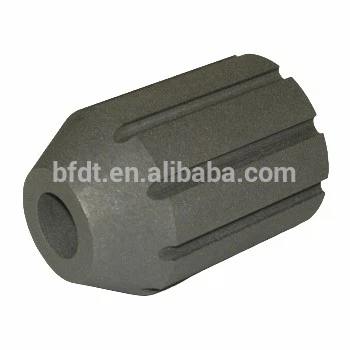
Now, let me tell you a bit about some of the other graphite products we offer. We have some really interesting items like the Graphite Waterway for Diamond Core Bits. These are used in the manufacturing of diamond core bits, which are essential tools in the mining and construction industries. The graphite waterway helps with the cooling and lubrication of the diamond core bit during operation.
We also have Graphite Thrust Bearings. These bearings are known for their self - lubricating properties and can withstand high temperatures and heavy loads. They're used in a variety of industrial applications, from pumps to turbines.
And of course, we're involved in the production of Diamond Tools. Graphite molds are used in the sintering process of diamond tools, ensuring that the tools are formed with high precision and quality.
If you're in the market for graphite gaskets or any of our other graphite products, and you're dealing with a radiation - exposed environment or any other challenging application, don't hesitate to reach out. We're here to help you find the right solution for your needs. Whether it's choosing the right type of graphite gasket or getting advice on how to use it in a radiation - prone area, our team of experts is ready to assist you.
In conclusion, graphite gaskets can be used in radiation - exposed environments, but it's crucial to understand the specific conditions and limitations. With proper assessment and selection, they can provide a reliable sealing solution. So, if you have any questions or need more information, feel free to get in touch. We're always happy to talk about our products and how they can fit into your projects.
References
"Graphite Materials in Nuclear Reactors" - A comprehensive study on the behavior of graphite in nuclear environments.
"Radiation Effects on Materials" - A general textbook that covers the effects of radiation on different materials, including graphite.