


Diamond tools are renowned for their exceptional hardness and cutting performance, making them indispensable in various industries such as construction, mining, and manufacturing. One crucial factor that significantly influences the performance of diamond tools is the cutting angle. Different cutting angles can lead to distinct differences in the tool's cutting efficiency, lifespan, and the quality of the cut. As a trusted diamond tools supplier, we have in - depth knowledge of these differences and are committed to providing high - quality products tailored to specific cutting requirements.
1. Understanding Cutting Angles in Diamond Tools
The cutting angle of a diamond tool refers to the angle between the cutting edge of the tool and the workpiece surface during the cutting process. It can be classified into different types, including rake angle, clearance angle, and cutting edge angle. Each of these angles plays a vital role in determining how the tool interacts with the material being cut.
Rake Angle
The rake angle is the angle between the face of the cutting tool and a perpendicular line to the workpiece surface. A positive rake angle means the face of the tool slopes away from the cutting edge in the direction of chip flow. This type of angle reduces the cutting force required, as it helps to shear the material more easily. As a result, tools with a positive rake angle are more efficient in cutting soft materials. For example, when cutting soft stones or non - ferrous metals, a diamond tool with a positive rake angle can quickly remove the material with less energy consumption.
On the other hand, a negative rake angle means the face of the tool slopes towards the cutting edge. Tools with a negative rake angle are more suitable for cutting hard and brittle materials. The negative rake angle provides more support to the cutting edge, preventing it from chipping or breaking under high cutting forces. In the case of cutting extremely hard materials like granite or concrete, a diamond tool with a negative rake angle can maintain its cutting edge integrity and perform the cutting operation effectively.
Clearance Angle
The clearance angle is the angle between the flank of the cutting tool and a perpendicular line to the workpiece surface. Its main function is to prevent the flank of the tool from rubbing against the workpiece, which can cause excessive heat generation and tool wear. A larger clearance angle reduces the friction between the tool and the workpiece, resulting in lower cutting temperatures and longer tool life. However, if the clearance angle is too large, the cutting edge may become weak and prone to breakage.
For diamond tools used in precision cutting, such as those for gemstone processing, a well - optimized clearance angle is essential. It ensures that the tool can cut smoothly without damaging the delicate workpiece, while also maintaining the sharpness of the cutting edge for a long time.
Cutting Edge Angle
The cutting edge angle is the angle between the two cutting edges of a tool. A smaller cutting edge angle results in a sharper cutting edge, which is beneficial for achieving a fine finish and precise cuts. Tools with a small cutting edge angle are often used in applications where high - quality surface finish is required, such as in the production of jewelry or in the precision machining of small components.

Conversely, a larger cutting edge angle provides more strength to the cutting edge. This makes the tool more suitable for rough cutting operations, where the focus is on removing a large amount of material quickly. For example, in the initial stages of stone quarrying, diamond tools with a larger cutting edge angle are preferred to break down large blocks of stone efficiently.
2. Differences in Cutting Performance
Cutting Efficiency
The cutting efficiency of diamond tools varies significantly with different cutting angles. Tools with a positive rake angle and a small cutting edge angle are generally more efficient in terms of material removal rate when cutting soft materials. They can quickly shear through the material, reducing the time and energy required for the cutting process.
In contrast, when dealing with hard materials, tools with a negative rake angle and a larger cutting edge angle are more efficient. These tools can withstand the high cutting forces generated during the cutting of hard materials, allowing for continuous and effective material removal. For instance, in the construction industry, when cutting concrete or hard rocks, diamond saw blades with appropriate negative rake and larger cutting edge angles can cut through the material at a relatively fast pace.
Tool Lifespan
The lifespan of a diamond tool is also closely related to the cutting angle. A well - chosen cutting angle can reduce the wear and tear on the tool, thereby extending its service life. Tools with an optimal clearance angle experience less friction, which means less heat is generated during cutting. Heat is one of the main factors that cause diamond particles to degrade and fall off the tool matrix.
For example, in the case of diamond core bits used for drilling holes in hard materials, a proper combination of rake, clearance, and cutting edge angles can ensure that the tool maintains its cutting performance for a longer time. The reduced friction and heat generation prevent premature wear of the diamond segments, allowing the core bit to drill more holes before replacement.
Quality of the Cut
The quality of the cut, including the surface finish and dimensional accuracy, is highly dependent on the cutting angle. Tools with a small cutting edge angle and a well - defined rake angle can produce a smoother surface finish. This is crucial in applications where a high - quality surface is required, such as in the manufacturing of optical components or in the finishing of marble countertops.
When it comes to dimensional accuracy, the cutting angle also plays a key role. A stable and appropriate cutting angle helps to maintain the straightness and precision of the cut. For example, in the machining of metal parts, diamond tools with precise cutting angles can ensure that the parts meet the required dimensional tolerances.
3. Applications of Diamond Tools with Different Cutting Angles
Construction Industry
In the construction industry, diamond tools are widely used for cutting various building materials such as concrete, bricks, and stones. For cutting concrete, diamond saw blades with a negative rake angle and a relatively large cutting edge angle are commonly used. These blades can withstand the high - impact forces generated during the cutting process and can quickly cut through thick concrete slabs.
On the other hand, when it comes to finishing work, such as cutting tiles or thin stone slabs, diamond tools with a positive rake angle and a small cutting edge angle are preferred. They can provide a clean and precise cut, ensuring a high - quality finish for the construction project.
Mining Industry
In the mining industry, diamond tools are used for cutting and drilling hard rocks. Diamond drill bits with a negative rake angle and a large cutting edge angle are essential for deep - hole drilling in mines. These drill bits can penetrate hard rock formations effectively, even under high - pressure conditions.
For surface mining operations, where large amounts of overburden need to be removed, diamond saws with optimized cutting angles can increase the efficiency of the material removal process. They can cut through the rock layers quickly, reducing the overall mining time and cost.
Manufacturing Industry
In the manufacturing industry, diamond tools are used for precision machining of various materials. For example, in the production of electronic components, diamond cutting tools with a small cutting edge angle and a positive rake angle are used to achieve high - precision cuts. These tools can cut through delicate materials such as silicon wafers without causing damage, ensuring the quality of the final product.
In the automotive industry, diamond - coated tools with specific cutting angles are used for machining engine components. The precise cutting angles help to achieve the required surface finish and dimensional accuracy, which is crucial for the performance and reliability of the engine.
4. Our Diamond Tools Offerings
As a leading diamond tools supplier, we offer a wide range of products designed with different cutting angles to meet the diverse needs of our customers. Our Graphite Saw Blade is carefully engineered with optimized cutting angles to ensure efficient cutting of graphite materials. The specific rake, clearance, and cutting edge angles are selected to provide a smooth and precise cut, while also extending the tool's lifespan.
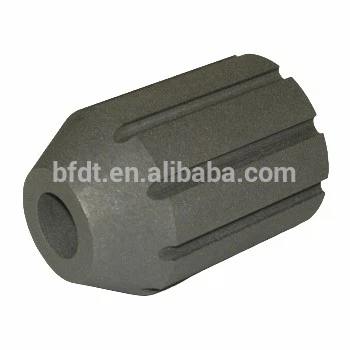
Our Graphite Waterway for Diamond Core Bits is another innovative product. The cutting angles of the associated diamond core bits are designed to enhance the drilling performance in various materials. Whether it is for geological exploration or construction drilling, these core bits can deliver excellent results.
We also offer Graphite Thrust Bearing which is often used in combination with diamond tools. The design of these bearings takes into account the cutting forces and angles of the diamond tools, ensuring stable and reliable operation.
5. Contact Us for Procurement
If you are looking for high - quality diamond tools with the right cutting angles for your specific applications, we are here to help. Our team of experts can provide you with professional advice on selecting the most suitable diamond tools based on your cutting requirements. Whether you need tools for construction, mining, or manufacturing, we have the products and knowledge to meet your needs. Please contact us to start a procurement discussion and explore how our diamond tools can enhance your cutting operations.
References
Boothroyd, G., & Knight, W. A. (2006). Fundamentals of machining and machine tools. CRC press.
Kalpakjian, S., & Schmid, S. R. (2013). Manufacturing engineering and technology. Pearson.
Trent, E. M., & Wright, P. K. (2000). Metal cutting. Butterworth - Heinemann.