


As a supplier of Graphite Heating Plates, I often encounter inquiries from clients regarding the thermal conductivity of these essential components. Understanding the thermal conductivity of a graphite heating plate is crucial for various industrial applications, as it directly impacts the efficiency and performance of heating systems. In this blog post, I will delve into the concept of thermal conductivity, explore the factors affecting it in graphite heating plates, and discuss its significance in industrial processes.
What is Thermal Conductivity?
Thermal conductivity is a fundamental property of materials that describes their ability to conduct heat. It is defined as the amount of heat energy that can be transferred through a unit area of a material in a unit time, under a unit temperature gradient. In simpler terms, it measures how quickly heat can pass through a material. The SI unit of thermal conductivity is watts per meter-kelvin (W/(m·K)).
Materials with high thermal conductivity are efficient at transferring heat, while those with low thermal conductivity are better insulators. For example, metals like copper and aluminum have high thermal conductivities, which is why they are commonly used in heat exchangers and electrical wiring. On the other hand, materials like rubber and glass have low thermal conductivities and are used for insulation purposes.
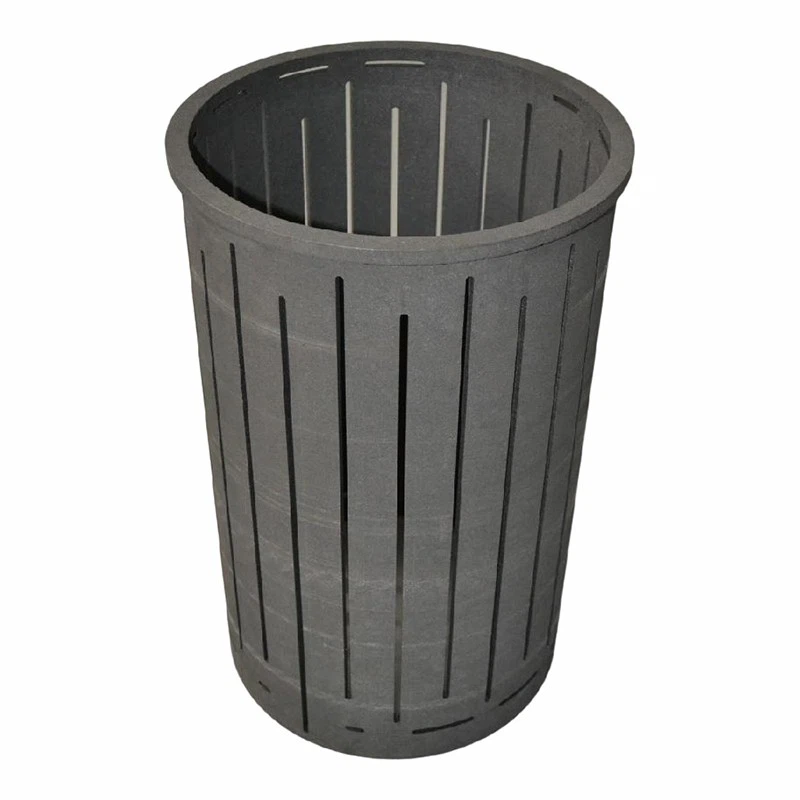

Thermal Conductivity of Graphite
Graphite is a unique material known for its excellent thermal and electrical properties. It is a form of carbon with a layered structure, where each layer consists of carbon atoms arranged in a hexagonal lattice. The carbon atoms within each layer are held together by strong covalent bonds, while the layers are held together by weak van der Waals forces.
This unique structure gives graphite its anisotropic properties, meaning its properties vary depending on the direction of measurement. In the basal plane (parallel to the layers), graphite has a high thermal conductivity due to the strong covalent bonds between the carbon atoms. In the perpendicular direction (across the layers), the thermal conductivity is much lower because of the weak van der Waals forces between the layers.
The thermal conductivity of graphite can vary depending on several factors, including its purity, crystal structure, and temperature. High-purity graphite with a well-ordered crystal structure generally has a higher thermal conductivity than lower-purity graphite. Additionally, the thermal conductivity of graphite increases with increasing temperature up to a certain point, after which it starts to decrease.
Thermal Conductivity of Graphite Heating Plates
Graphite heating plates are widely used in various industrial applications, such as semiconductor manufacturing, heat treatment, and chemical processing. These plates are designed to provide uniform and efficient heating by converting electrical energy into heat. The thermal conductivity of a graphite heating plate plays a crucial role in determining its heating performance.
A high thermal conductivity ensures that heat is transferred quickly and evenly across the surface of the plate, resulting in uniform heating of the workpiece. This is particularly important in applications where precise temperature control is required, such as semiconductor manufacturing. In addition, a high thermal conductivity allows the heating plate to reach the desired temperature quickly, reducing the heating time and improving the overall efficiency of the process.
The thermal conductivity of a graphite heating plate can be influenced by several factors, including the type of graphite used, the manufacturing process, and the design of the plate. At our company, we use high-purity graphite with a well-ordered crystal structure to ensure optimal thermal conductivity. Our manufacturing process involves precise machining and finishing to minimize any defects or impurities that could affect the thermal performance of the plate.
Factors Affecting the Thermal Conductivity of Graphite Heating Plates
In addition to the type of graphite and the manufacturing process, several other factors can affect the thermal conductivity of a graphite heating plate. These factors include:
Temperature: As mentioned earlier, the thermal conductivity of graphite increases with increasing temperature up to a certain point, after which it starts to decrease. Therefore, the operating temperature of the heating plate can have a significant impact on its thermal performance.
Thickness: The thickness of the heating plate can also affect its thermal conductivity. A thicker plate generally has a lower thermal conductivity than a thinner plate because heat has to travel a longer distance through the material. However, a thicker plate may be necessary in some applications to provide sufficient mechanical strength.
Surface Area: The surface area of the heating plate can also influence its thermal conductivity. A larger surface area allows for more heat transfer to occur, resulting in a higher thermal conductivity. Therefore, the design of the heating plate should be optimized to maximize its surface area.
Coating: Some graphite heating plates are coated with a thin layer of material to improve their corrosion resistance or to enhance their thermal performance. The type of coating and its thickness can affect the thermal conductivity of the plate.
Significance of Thermal Conductivity in Industrial Applications
The thermal conductivity of a graphite heating plate is of utmost importance in various industrial applications. Here are some examples:
Semiconductor Manufacturing: In semiconductor manufacturing, precise temperature control is crucial for the growth of high-quality semiconductor crystals. Graphite heating plates with high thermal conductivity are used to provide uniform and efficient heating, ensuring the consistent quality of the semiconductor products.
Heat Treatment: Heat treatment is a process used to modify the properties of metals and alloys by heating and cooling them in a controlled manner. Graphite heating plates are used in heat treatment furnaces to provide uniform heating and to ensure the desired microstructure and properties of the workpiece.
Chemical Processing: In chemical processing, graphite heating plates are used to heat reactors and vessels to carry out chemical reactions. The high thermal conductivity of the plates allows for efficient heat transfer, ensuring the reaction proceeds at the desired rate and temperature.
Conclusion
In conclusion, the thermal conductivity of a graphite heating plate is a critical property that determines its heating performance and efficiency. A high thermal conductivity ensures uniform and efficient heating, which is essential in various industrial applications. At our company, we are committed to providing high-quality graphite heating plates with optimal thermal conductivity. Our products are designed to meet the specific needs of our clients and to provide reliable and efficient heating solutions.
If you are interested in learning more about our Graphite Heating Plate or other graphite products, such as Graphite Heater For High Temperature Furnace and Graphite Insulation Pad, please feel free to contact us. We would be happy to discuss your requirements and provide you with a customized solution.
References
Incropera, F. P., DeWitt, D. P., Bergman, T. L., & Lavine, A. S. (2007). Fundamentals of heat and mass transfer. John Wiley & Sons.
Touloukian, Y. S., & Ho, C. Y. (1970). Thermal conductivity - nonmetallic solids. IFI/Plenum.
Zhang, X. (2007). Nano/microscale heat transfer. McGraw-Hill.